Waste disposal emerges as one of the biggest problems of contemporary society on a global scale. A study published by Statista predicts how by 2050 global waste generation per inhabitant
The transition to a circular economy increasingly shifts the focus to the reuse and proper disposal of existing materials and products. What is commonly considered waste, if disposed of properly, has the potential to be transformed into a new product that can be reintegrated into commerce.
Hence, ReLearn, a Turin-based start-up led by Riccardo Leonardi and born in 2019, decided to take active action by improving the waste collection and management process through an innovative and highly digitized service aimed at achieving sustainability-related goals through the improvement of the waste disposal process.
ReLearn’s strategy aims to simplify the waste collection process so that it is at the fingertips of every citizen. The goal is to innovate the disposal route by making the city more sustainable through a process of product sorting and consequent reduction of Co2 emissions caused by the waste collection, separation and processing processes.
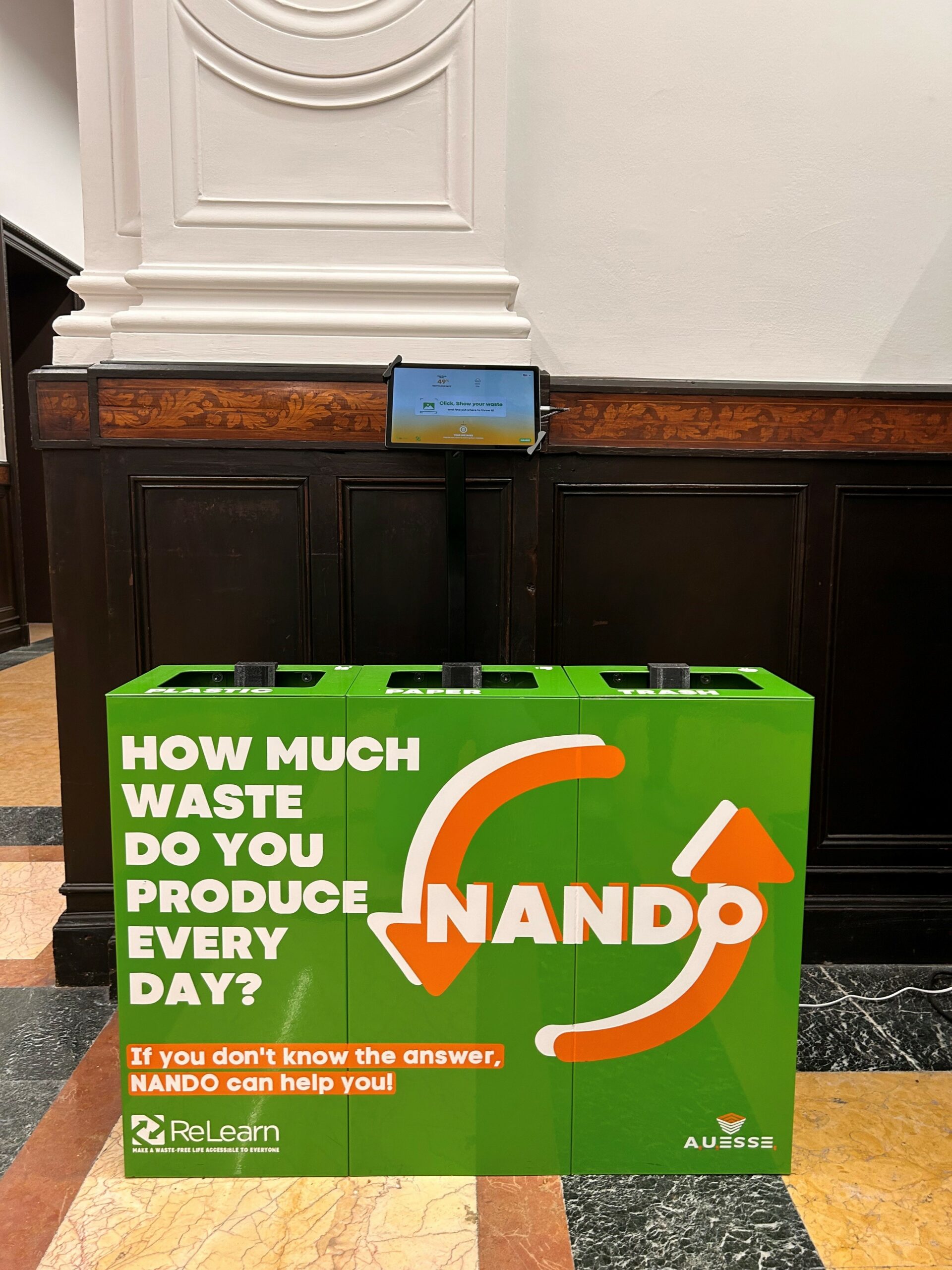
The process of creating a useful product to meet all these needs led ReLearn to the conception of Nando, a smart trash can designed to better optimize the waste sorting process. Using machine learning and image recognition techniques, Nando is able to recognize the material of the waste and then indicate to the user the correct container where to dispose of it. Starting in June, on the second floor of Planet Smart City’s Competence center in Turin, Nando is the protagonist of an experimentation phase aimed at monitoring separate waste collection through a system that accompanies the user from the stage of evaluating the nature of the product to that of disposal inside the bin. Nando’s experimentation has already intercepted the interest of many realities on the Italian territory in addition to Planet Smart City, the first pilot projects of the product are involving realities including Iren, Veolia, Bocconi University, the ILO International Training Center in Turin, Talent Garden co-working places and the Municipality of Trapani.
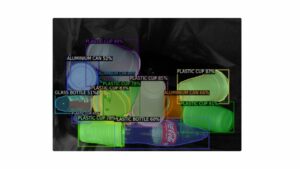
NANDO recognizes all the items inside the bins by discovering improperly disposed waste.
How it works
Nando, named in honor of King Ferdinand II of Bourbon, the first political figure to issue an ordinance to regulate waste collection in 1832. The system on which the product is based takes advantage of artificial intelligence technology and is composed of a series of IoT sensors useful for recognizing the type of waste, moreover, in order to use it there is no need to change the recycling bins. In fact, the proposed technology is easily installed even on commonly available and commercially available bins. Nando also takes advantage of gamification, turning the daily act of throwing a waste into a moment of entertainment, through which it is possible to best learn good practices for recycling collection. A tablet, after taking a picture of the product to be thrown away, will be able to indicate the type of material that makes it up and its destination bin.
Future developments
The use of a Smart product for waste management has the potential to become an essential element within Smart Districts, with the goal of converting the domestic space into a virtuous place in terms of household waste management and disposal. Its ease of use and opportunity for learning through a daily activity strengthens resident awareness and increases the sense of community through active involvement.
Are you curious to find out more about NANDO? Take a look at its product data sheet found in the KIT!